I used to think survival meant learning how to endure structures that were never designed for minds like mine. Push through. Adapt faster. Stay grateful for spaces that barely tolerated your existence.
That story finally broke apart the day I lost my home.
What most people saw was an eviction, a financial collapse, another person struggling through hard times in an economy grinding people down faster than they can recover. But underneath that surface was another reality entirely: I was about to lose the animal helping regulate my nervous system.
And most people couldn’t understand why that mattered.
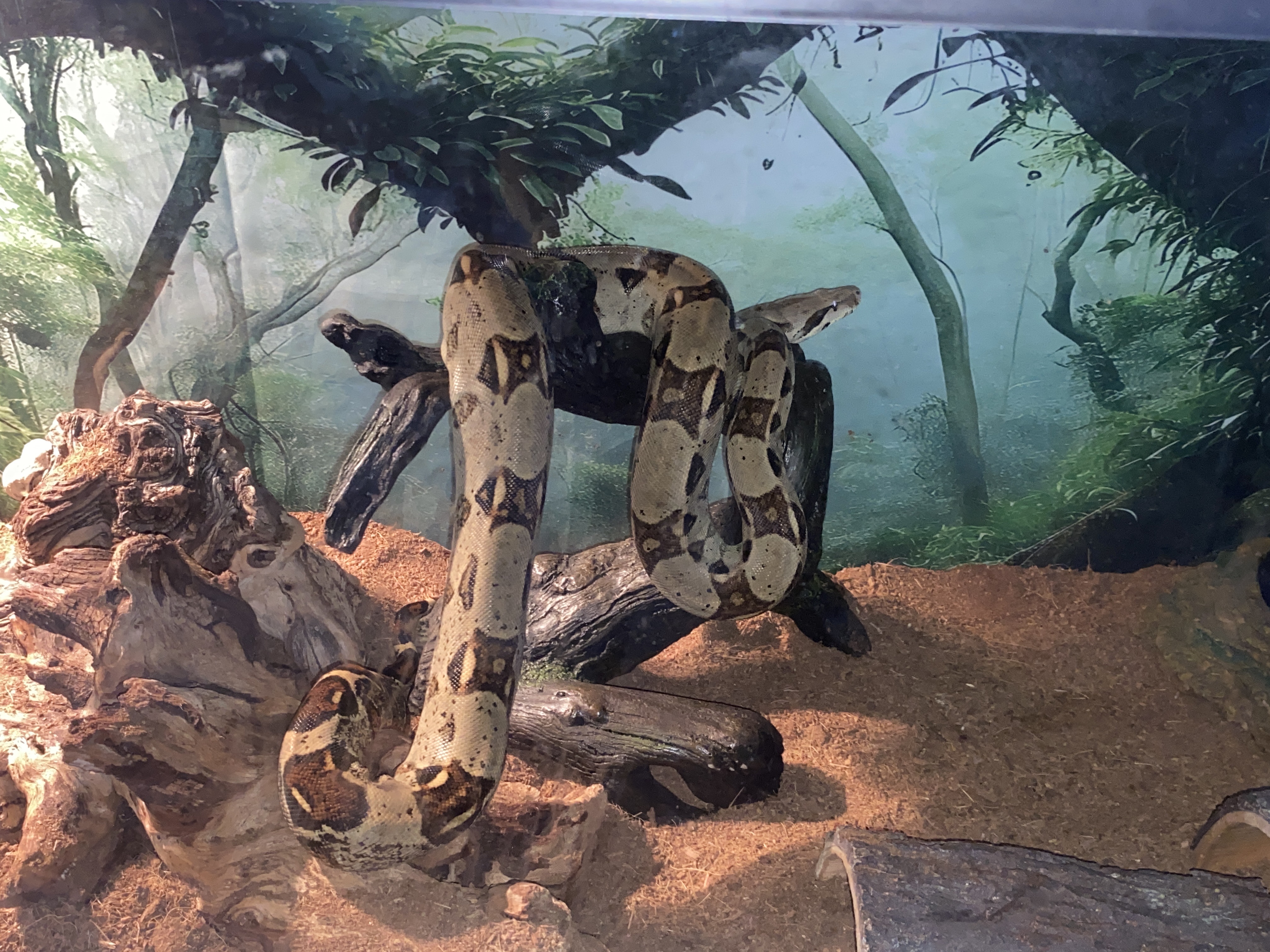
Kismet was never “just a snake.”
He appeared beneath my kitchen sink during one of the most stable periods of my adult life. At the time, I had my own place, steady income, and something rarer than either of those things: nervous-system peace. The moment Kismet entered my life, something in my environment changed. The house felt calmer. I felt calmer. My thoughts slowed down enough to breathe inside them.
Over time, I came to understand what I was experiencing was regulation.
For a neurodivergent mind navigating ADHD, Bipolar Disorder, C-PTSD, and Menière’s disease, stability is not a luxury. It is infrastructure. Kismet became part of mine.
He eventually became my documented emotional support animal, though even that language feels too small for what the relationship actually was. People hear “ESA” and imagine comfort. What they often fail to understand is that some animals become environmental anchors. They change the way a nervous system moves through space.
Then the housing crisis came.
And suddenly I found myself standing inside a reality many reptile keepers already know well: people are often willing to shelter the human while rejecting the animal helping keep that human stable.
Again and again, the same question appeared:
“What are you going to do with the snake?”
Not Kismet. Not your partner. Not the animal helping regulate your life.
Just:
the snake.
What struck me most wasn’t cruelty. Most people weren’t trying to be cruel. The deeper problem was structural. Reptiles exist outside the hierarchy of animals society has decided are emotionally legitimate. Snakes especially trigger fear, projection, mythology, and misunderstanding before people ever encounter the actual animal.
And neurodivergent regulation itself is still poorly understood by much of the world.
Put those two realities together and you end up with people unable to comprehend why losing a boa could destabilize someone’s entire life.
Eventually, I made the hardest decision I have made in years.
I rehomed Kismet.
Not because he stopped mattering, but because I loved him enough to choose stability for him while my own life was collapsing around me.
He now lives in a home where he is safe, cared for, and able to thrive. One day, if life allows, his lineage will return to me.
Oddly enough, losing Kismet clarified something.
I no longer want to spend my life forcing myself into structures fundamentally incapable of understanding the realities of minds like mine. I don’t want to keep shrinking my life until it fits inside environments built without nervous systems in mind.
So I began rebuilding differently.
Not around performance or corporate expectations, but around the work itself: the essays, the analysis, the conversations, the snakes, the philosophy, and the strange architecture connecting nervous systems, symbolism, consciousness, structure, and survival.
What emerged from that reconstruction is something I now call Kismet’s House.
Part sanctuary. Part archive. Part long-term vision.
A future space dedicated to neurodivergent regulation, snake advocacy, environmental awareness, education, and the growing body of work unfolding across this ecosystem.
Because after everything that happened, one truth became impossible to ignore:
People should not have to choose between stability and the animals helping them remain stable.
And perhaps that is the strange wisdom Kismet arrived to teach me in the first place.
Sometimes what saves us does not arrive in a form the world recognizes immediately.
Leave a Reply