This week, someone asked me why I have a snake.
Not as a metaphor, but as an actual creature.
Alive. Coiled. Breathing. Watching me while I go about my day.
“Of all the pets to have,” they said, “why a snake?”
I told them the truth.
Because that’s what I’m most comfortable with.
And besides, he found me.
Kismet didn’t slither into my life by accident.
He showed up under my kitchen sink.
Not in a vision, not on a mountaintop, not in a pet store. But beneath the cabinet, in the overlooked shadow of my new home. I had recently moved in. I was finally living life on my own terms, paying my bills, breathing in my space, shedding the last layer of survival to step into something real.
And then, one day, I opened the cabinet under the sink… and there he was.
Silent. Calm. Coiled.
Kismet didn’t arrive in my chaos.
He arrived in my clarity.
Not as a warning, but as a witness to the fact that I’ve changed.
That’s how snake medicine works.
It doesn’t need a spectacle. It doesn’t demand your attention.
In places you’ve ignored, it appears quietly to mark the threshold you just crossed.
The Snake Has Always Been Here
Across cultures, serpents have always been more than animals. They are symbols of power, healing, destruction, and rebirth, the uncomfortable middle space between what was and what will be.
In Ancient Egypt, the cobra was often depicted as crowning the pharaohs. The goddess Wadjet appeared as a rearing serpent, guarding rulers and striking in protection.
In Hinduism, serpents coil around Shiva, the god of transformation. The energy of Kundalini sleeps at the base of the spine, waiting to rise through the chakras like a snake through the spine, awakening fire, power, and truth.
In Greek myth, the snake appears on the Rod of Asclepius, symbol of healing and medicine. But it also coils around the Caduceus, the twin serpents of Hermes, symbolizing duality, integration, and the tension between opposites, logic and intuition, masculine and feminine, divine and mortal.
In Mesoamerica, Quetzalcoatl, the feathered serpent god, was wisdom, wind, fertility, and sky, an elemental intelligence that tied together heaven and earth.
In the Judeo-Christian tradition, Nehushtan is the bronze serpent Moses lifted in the wilderness. When snakes bit the people, they were told:
“Look at the serpent. Face it. And you will live.” (Numbers 21:8–9)
Healing came not by avoiding the danger, but by making eye contact with the thing that hurt them.
Then there is the Ouroboros, the snake that eats its tail.
A symbol of eternity. Of wholeness. Of becoming through destruction.
A reminder that nothing dies, it just transforms.
What Kismet Is
People say, “Snakes make my flesh crawl.”
But that’s what happens when you live your truth: you make people uncomfortable.
Kismet isn’t just a pet. He is my ground wire.
He reflects how my neurodivergence moves, sensitive, precise, responsive, and easily misunderstood.
He is how my nervous system feels: silent, electric, alert.
He doesn’t ask to be understood.
He doesn’t perform.
He is.
And I get that.
Because I’ve spent years shrinking for other people’s comfort, coiling smaller to take up less space in rooms that couldn’t hold me, I’ve done the dance of masking, softening, translating myself for people who didn’t know how to read me.
But I’m not doing that anymore.
I don’t trade my clarity for someone else’s sense of normal.
Kismet came into my life as a living symbol of that shift.
He didn’t come for decoration.
He came to say:
“You’ve shed the skin. Now hold the shape.”
So, Why a Snake?
Because snakes don’t chase validation.
They move when it’s time.
They wait until it’s right.
They shed when the old skin doesn’t fit.
They don’t ask for applause. They keep transforming.
Kismet didn’t show up to fix me.
He showed up to reflect on me.
Not the broken version. Not the survival mask.
But the version that finally said:
“This is mine. This is me. This is enough.”
So why a snake?
Because he doesn’t apologize for how he moves.
And neither do I.
- Campbell, J. The Power of Myth. Anchor Books, 1988.
- Wilkinson, R.H. The Complete Gods and Goddesses of Ancient Egypt. Thames & Hudson, 2003.
- Jung, C.G. Man and His Symbols. Dell, 1964.
- Walker, B. The Woman’s Encyclopedia of Myths and Secrets. HarperOne, 1983.
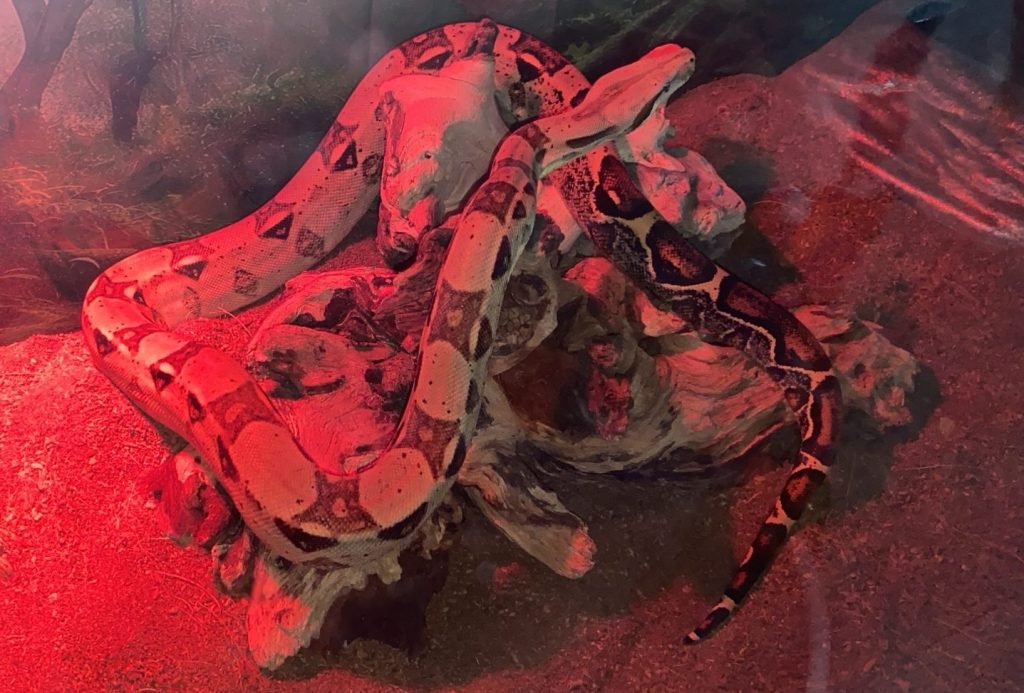
 Book of Kismet
Leave a comment